
Home · Ingredients · Tripe
Tripe for dogs
Green or black tripe, slow dehydrated at very low temperatures.
Tripe is the stomach of grazing animals such as cattle and sheep. Green or black tripe still has its stomach lining on: it isn’t scraped clean, the way tripe for the table often is.1 Slow dehydrated at very low temperatures, it makes a medium-hard, biltong-style treat whose aroma encourages interest from fussy eaters. Raw, it’s one of the four parts of our All-in-One frozen raw.
2dehydrated tripe treats
4frozen raw recipes with tripe
The cut
Four stomachs, four kinds of tripe.
A cow has four stomachs, and each gives a different tripe: the rumen gives blanket or smooth tripe, the reticulum honeycomb tripe, the omasum book or leaf tripe, and the abomasum reed tripe.1 Tripe sold for people usually has its dark inner lining removed, and is scalded and whitened.2 Green or black tripe keeps its lining, so its colour runs from greenish to almost black, depending on which stomach it comes from, and it keeps its full aroma.
Our Tripe Biltong and Tripe Sticks are made from green or black tripe, mainly beef and sometimes sheep, slow dehydrated at very low temperatures in our own factory in Cape Town. Tripe goes into every one of our All-in-One frozen raw recipes too:
- Biltong-style piecesTripe Biltong.
- Long, thin stripsTripe Sticks.
- In frozen rawAll-in-One Original, Beef, with Fish and Puppy: muscle meat, organ meats, tripe and bone in one pack. All-in-One Original uses beef tripe.
How it chews
Biltong-style and medium hard.
Dehydrated tripe is firm, in the middle of our scale. Both our tripe treats rate 3 of 5, medium hard: Tripe Biltong in biltong-style pieces, Tripe Sticks in long, thin strips. In All-in-One, the tripe is part of the mince, so there’s nothing to chew through.
| Product | What it is | Chew strength |
|---|---|---|
| Tripe Biltong | Biltong-style pieces of green or black tripe | 3 of 5 · Medium hard |
| Tripe Sticks | Long, thin strips of green or black tripe | 3 of 5 · Medium hard |
| All-in-One Original | Frozen raw mince: muscle meat, organ meats, tripe and bone | A meal, not a chew |
Chew strength is our own scale, from 1, very soft, to 5, very hard. How we rate it.
What it brings
An aroma dogs notice.
Tripe’s strong aroma encourages interest from fussy eaters. As a reward, the medium-hard, biltong-style pieces support focus in training.
All-in-One frozen raw is dog food, registered under Act 36 of 1947. Tripe Biltong and Tripe Sticks are complementary pet food.
A treat, not a meal. Treats are complementary pet food. Keep them under about 10% of what your dog eats in a day.
Stay close while your dog chews. Keep clean drinking water nearby, and take the chew away once it’s small enough to swallow.
Frozen raw is raw meat. Keep All-in-One frozen, thaw it in the fridge, not on the counter, and wash hands, bowls and surfaces afterwards. Handle raw like a butcher.
Questions
What people ask about tripe.
What is green tripe?
Tripe that still has its stomach lining on, because it hasn’t been scraped clean. Depending on which of the four stomachs it comes from, its colour runs from greenish through brown to almost black; the trade calls it green tripe or black tripe. Tripe for the table usually has its dark inner lining removed, and is whitened.
Is tripe good for fussy dogs?
Its strong aroma encourages interest from fussy eaters. Try a piece of Tripe Biltong as a reward, or give a Tripe Stick alongside your dog’s usual food.
Is dehydrated tripe the same as raw tripe?
No. Tripe Biltong and Tripe Sticks are tripe slow dehydrated at very low temperatures, so they keep in the cupboard as treats. Raw tripe is part of our All-in-One frozen raw, which stays in the freezer.
How much tripe can my dog have?
As a treat, keep it under about 10% of what your dog eats in a day. All-in-One is a meal: feed it according to the pack label.
Is green tripe actually green?
Often it isn’t. Its colour depends on which of the four stomachs it comes from: the lining of the big first one, the rumen, is brown.3 Green or black, it isn’t scraped clean, so it keeps its stomach lining.
Is tripe offal?
Yes. South Africa’s red meat regulations count the stomach as “rough offal”, with the intestines and feet.7
Still wondering?
Have a question about our products or feeding guidelines? Type your question or ask using your voice.
Rather ask a person? Ask the butcher, by email or the contact form.
Made from tripe
2- Details
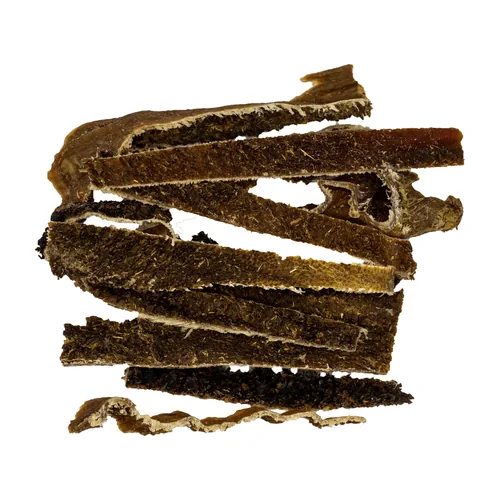 Tripe Biltong3/5 · Medium hardTripe Biltong is a natural biltong treat made from green or black tripe. It offers rich aroma, high palatability and animal-based nutrition in a simple chew or reward format. Organ-meat treats are naturally nutrient-dense, so they work well as occasional rewards, training treats or meal boosters when fed in moderation as part of a balanced treat routine.
- Details
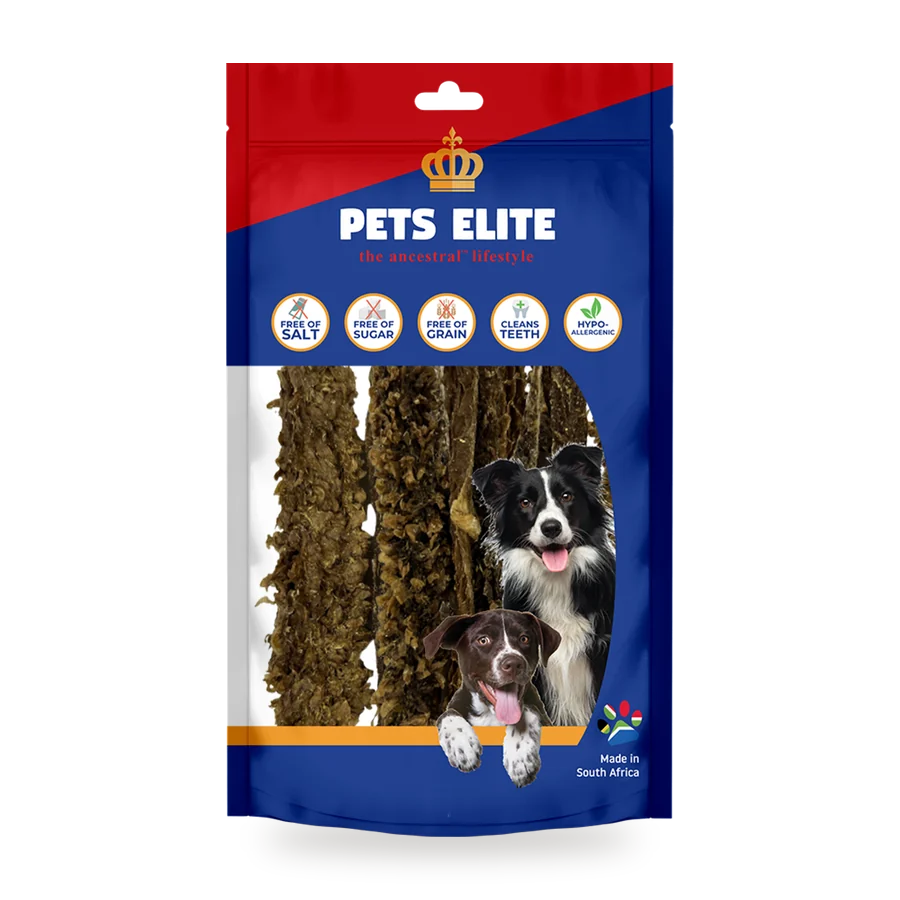 Tripe Sticks3/5 · Medium hardGreen and black herbivore tripe, dehydrated into sticks. 160g a pack. Pets Elite hold it under cold-chain control from abattoir to production floor.
Tripe in our frozen raw
4- Details
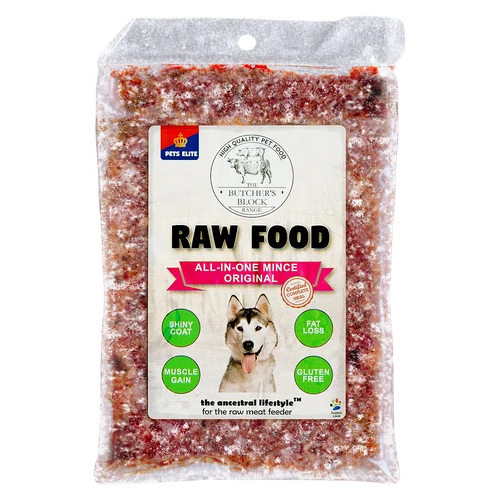 All-in-One OriginalFrozenPets Elite All-in-One Original (pork & beef): a complete raw meal built on muscle meat, organ meats, bone and green and black tripe. No grain, gluten, sugar or added salt. Frozen in 500 g packs: defrost and serve.
- Details
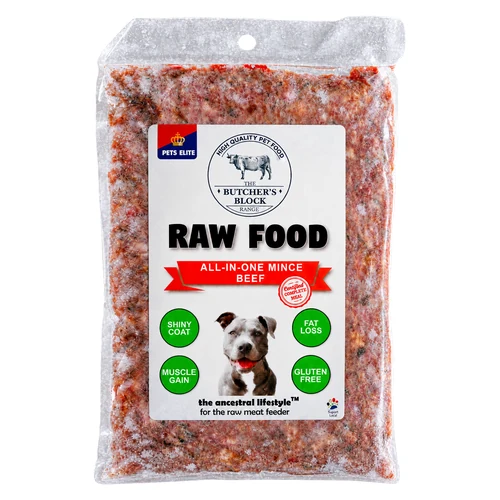 All-in-One BeefFrozenPets Elite All-in-One Beef: the Original recipe with the pork taken out, for pork-free households. Beef muscle meat, organ meats, bone and green and black tripe, with no grain, gluten, sugar or added salt. Frozen in 500 g packs.
- Details
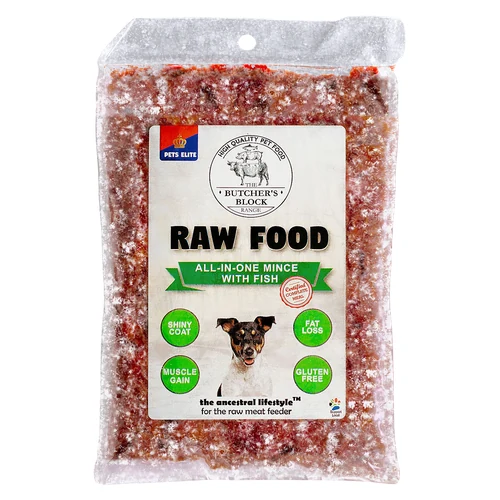 All-in-One with FishFrozenPets Elite All-in-One Fish: the Original recipe with added fish. Muscle meat, organ meats, bone, tripe and fish, with no grain, gluten, sugar or added salt. Frozen in 500 g packs.
- Details
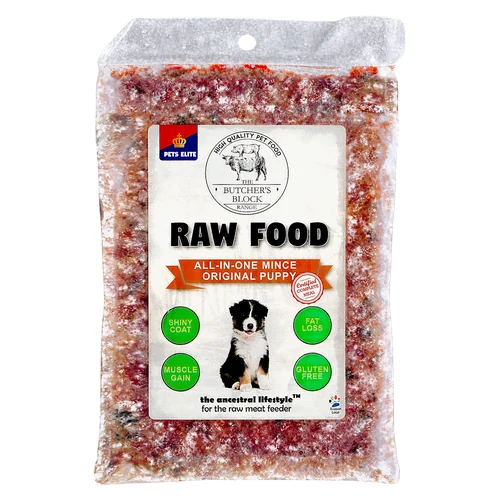 All-in-One PuppyFrozenPets Elite All-in-One Puppy (Growing Needs): a recipe we make because retailers asked for one; its nutrition differs little from All-in-One Original. Raw meat, organ meats, tripe and ground bone, with no grain or fillers. Frozen in 500 g packs.
Sources
Where these facts come from.
- CooksInfo, “Tripe”.Which stomach chamber gives which tripe, and what green tripe means in English-speaking markets.
- USDA Agricultural Marketing Service, Institutional Meat Purchase Specifications, Series 700, 1993, “Variety meats and edible by-products, items 726 and 727”.Specifications for beef tripe for the table: scalded, with the dark inner lining removed; white to light pale yellow (item 726) or creamy white (item 727).
- Sisson S. 2nd edn, W.B. Saunders, Philadelphia, 1914, “The Anatomy of the Domestic Animals”.Pp. 453–472: a medium-sized cow’s stomach holds about 110 to 150 litres, about 80% of it the rumen, whose lining is brown; the omasum has about a hundred folds; a sheep’s holds about 15 litres.
- USDA Agricultural Marketing Service, Institutional Meat Purchase Specifications, Series 700, draft 2020, “Variety meats and edible by-products”.Item 1741: the omasum, “also referred to as Bible tripe”.
- Dictionary of South African English, “pens en pootjies”.Pens: belly, tripe.
- Vuk’uzenzele, South African Government, 2025, “Tripe and samp delicacy”.Ulusu or mogodu: tripe.
- Red Meat Regulations, 2004 (GN R.1072), Meat Safety Act 40 of 2000, “Regulation 1: definitions”.Rough offal: the stomach, intestines, feet and skin-on head.
- Product facts, the tripe we use, chew strength and pack sizes: our own butchery, product pages and packs.
Written by Pets Elite, a Cape Town business run by a master butcher and in the pet trade since 2002. Last checked 16 October 2026.
More ingredients