
Home · Ingredients · Pork skin
Pork skin and pig’s ears
Rolled, plaited and shaped.
Pork skin, or rind, is the pig’s skin, and its main protein is collagen.12 A pig’s ear is that skin on both sides of a thin sheet of cartilage.3 Our Natural Hide chews and our other pork skin chews are made from it, from soft to hard, and we sell the pig’s ear whole.
17chews on this page
1–5chew strength, of 5
The cut
Skin, and the ear.
Under the skin’s surface lies the dermis, a dense layer of collagen,1 the protein that gives skin its strength.2 The ear’s cartilage is elastic cartilage, laced with elastic fibres,4 which is why an ear bends.
Our master butchers make the pork skin chews in our own factory in Cape Town, and the shape decides the chew:
- Rolled and plaitedSwiss Roll, Sausage Roll and Natural Hide Koeksister.
- ShapedNatural Hide Bone, Rings and Patties, Meaty Biscuit and Samoosa.
- Chips and bitesNatural Hide Chips, Doggy Chips, Doggy Crisps, Mint Drops and Meat Puffs.
- With peanutsPeanut Brittle: pork skin with peanuts all the way through.
- EarsPig’s Ear, sold whole; and Filled Pig’s Ear and Filled Miniature Pig’s Ears, pork skin folded into an ear and filled with our beef oesophagus jerky.
How it chews
Soft to hard, depending on the thickness.
Most of our pork skin chews rate 2 to 4 of 5: the same chew runs from soft to hard with its shape and thickness, so match the piece to your dog. Sausage Roll and Pig’s Ear rate 3 of 5, medium hard; Peanut Brittle 4 of 5, hard; and the filled ears 4 to 5 of 5, very hard.
| Product | What it is | Chew strength |
|---|---|---|
| Natural Hide Bone | Pork skin shaped into a bone | 2–4 of 5 · Soft to hard |
| Natural Hide Rings | Rings of pork skin, small and large | 2–4 of 5 · Soft to hard |
| Natural Hide Patties | Pork skin patties | 2–4 of 5 · Soft to hard |
| Natural Hide Koeksister | Pork skin plaited into a koeksister | 2–4 of 5 · Soft to hard |
| Natural Hide Chips | Folded pork skin chips | 2–4 of 5 · Soft to hard |
| Doggy Chips | Crunchy pork skin chips | 2–4 of 5 · Soft to hard |
| Doggy Crisps | Crunchy pieces of pork skin | 2–4 of 5 · Soft to hard |
| Meat Puffs | Puffed pork skin, fried in beef tallow | 1–2 of 5 · Soft |
| Meaty Biscuit | A pork skin chew | 2–4 of 5 · Soft to hard |
| Samoosa | A pork skin chew | 2–4 of 5 · Soft to hard |
| Mint Drops | Bite-size blocks of pork skin, with a hint of mint | 2–4 of 5 · Soft to hard |
| Sausage Roll | A pork skin roll | 3 of 5 · Medium hard |
| Swiss Roll | Pork rind, rolled into a firm stick | 2–4 of 5 · Soft to hard |
| Peanut Brittle | Pork skin with peanuts all the way through | 4 of 5 · Hard |
| Pig's Ear | A whole pig’s ear: skin over cartilage | 3 of 5 · Medium hard |
| Filled Pig's Ear | Pork skin folded into an ear, filled with beef oesophagus jerky | 4–5 of 5 · Very hard |
| Filled Miniature Pig's Ears | Small filled ears, with a softer filling | 4–5 of 5 · Very hard |
Chew strength is our own scale, from 1, very soft, to 5, very hard. How we rate it.
What it brings
A long, steady chew.
Skin and cartilage both contain collagen.24 The firm, layered shapes encourage a long, steady chew, and the softer chips and bites make handy rewards.
Offer pig’s ear as an occasional treat. Peanut Brittle has peanuts all the way through, the filled ears carry beef oesophagus, and Meat Puffs are made with beef tallow: skip them if your dog has a peanut or beef sensitivity.
A treat, not a meal. Treats are complementary pet food. Keep them under about 10% of what your dog eats in a day.
Stay close while your dog chews. Choose a size bigger than your dog’s mouth, keep clean drinking water nearby, and take the chew away once it’s small enough to swallow. Peanut Brittle and the filled ears are hard chews: take them away if sharp pieces break off.
Wash your hands after handling chews, as you would after handling meat,5 pick up what your dog leaves, and keep chews away from small children.
Questions
What people ask about pork skin and pig’s ears.
Is pork skin the same as rawhide?
No. Rawhide is untanned cattle hide,6 usually the inner layer split from the hide in the leather trade;7 our pork skin chews, Natural Hide included, are pig’s skin. They’re different chews rather than better or worse, so choose by your dog’s size and chewing style, and stay close with either.
Are pig’s ears good for dogs?
As an occasional chew, yes: a pig’s ear is medium hard, 3 of 5. Choose one sized for your dog, stay close while your dog chews, and wash your hands afterwards, as you would after handling meat.
Are pig’s ears high in fat?
Fairly: in USDA data, raw pig’s ear has about 15 g of fat per 100 g.8 That’s why we suggest them now and then rather than every day, and keep treats under about 10% of what your dog eats in a day.9
Are pig’s ears good for puppies?
Our Pig’s Ear rates 3 of 5, medium hard, which is firm for young teeth. For puppies, start with the softer chews in Puppies and small dogs, and ask your vet if you’re unsure.
Can dogs eat pork rinds or crackling?
Pork-rind snacks and crackling are made for people, usually with plenty of salt.10 A pork skin chew made for dogs is a different product: check the ingredients printed on the pack.
How many can my dog have?
Keep treats under about 10% of what your dog eats in a day. A whole pig’s ear is a big treat for a small dog, so give one at a time, with you nearby.
Still wondering?
Have a question about our products or feeding guidelines? Type your question or ask using your voice.
Rather ask a person? Ask the butcher, by email or the contact form.
Made from pork skin
17- Details
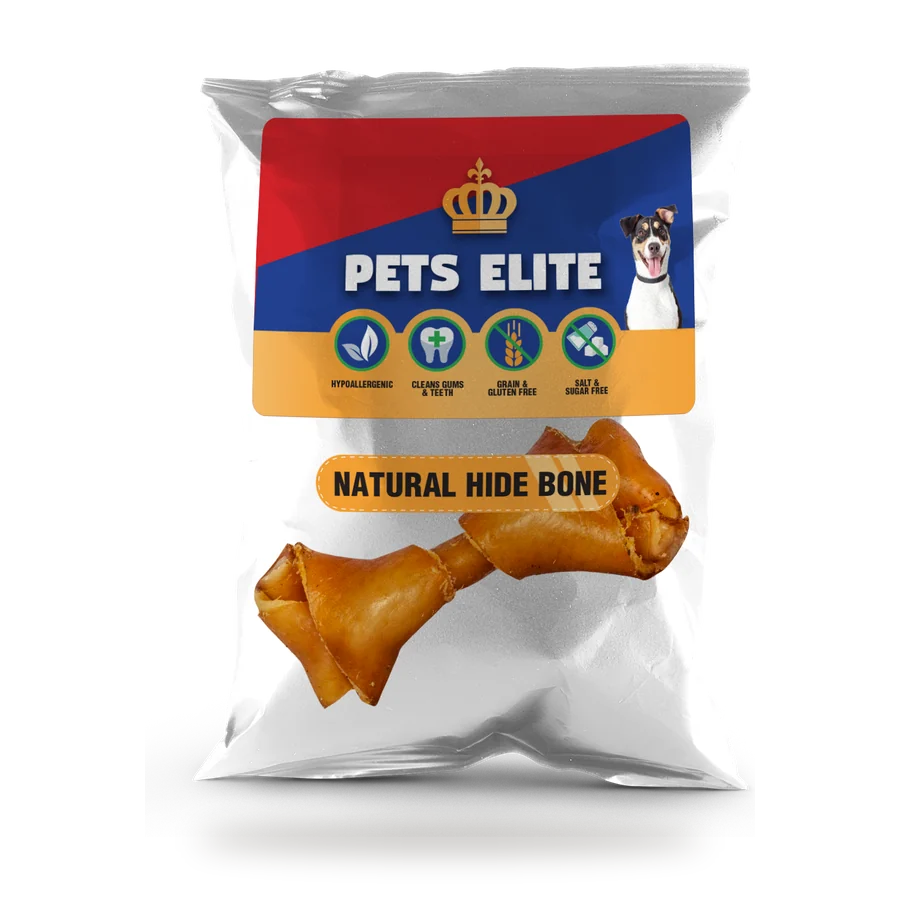 Natural Hide Bone2–4/5 · Soft to hardReal pork rind, shaped into a classic bone form and dehydrated. Large is about 19cm, Medium about 15cm. Every piece varies in size, colour and shape because it comes off a different animal — that is what an unbleached product looks like.
- Details
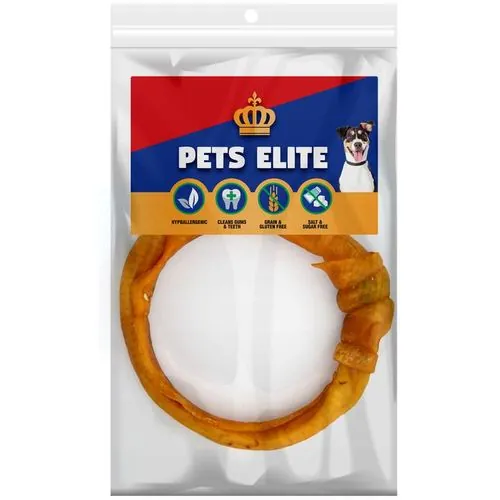 Natural Hide Rings2–4/5 · Soft to hardNot available online yetPets Elite Natural Hide Rings is a pork-skin based natural chew with a collagen-style texture and a shape designed for chewing interest. Chew strength varies with shape and thickness. It offers a grain-free alternative to starch biscuits and rawhide-style products.
- Natural Hide Patties2–4/5 · Soft to hardNot available online yetPets Elite Natural Hide Patties is a pork-skin based natural chew with a collagen-style texture and a shape designed for chewing interest. Chew strength varies with shape and thickness. It offers a grain-free alternative to starch biscuits and rawhide-style products.Details
- Details
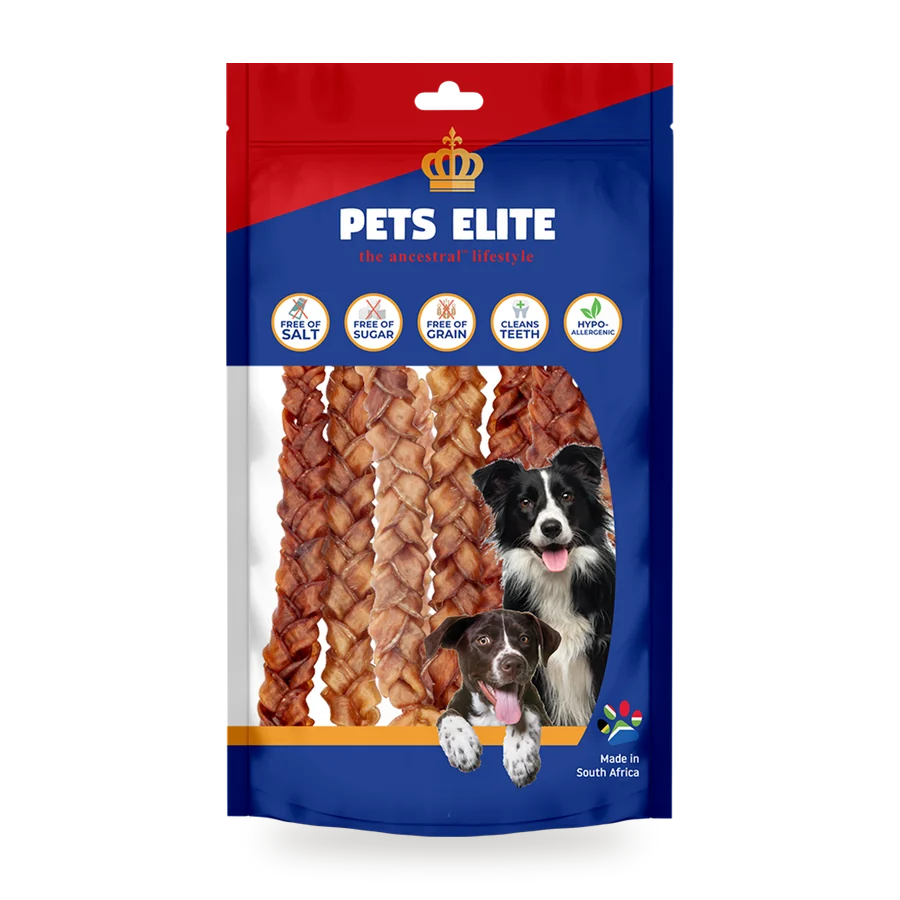 Natural Hide Koeksister2–4/5 · Soft to hardPork skin.
- Details
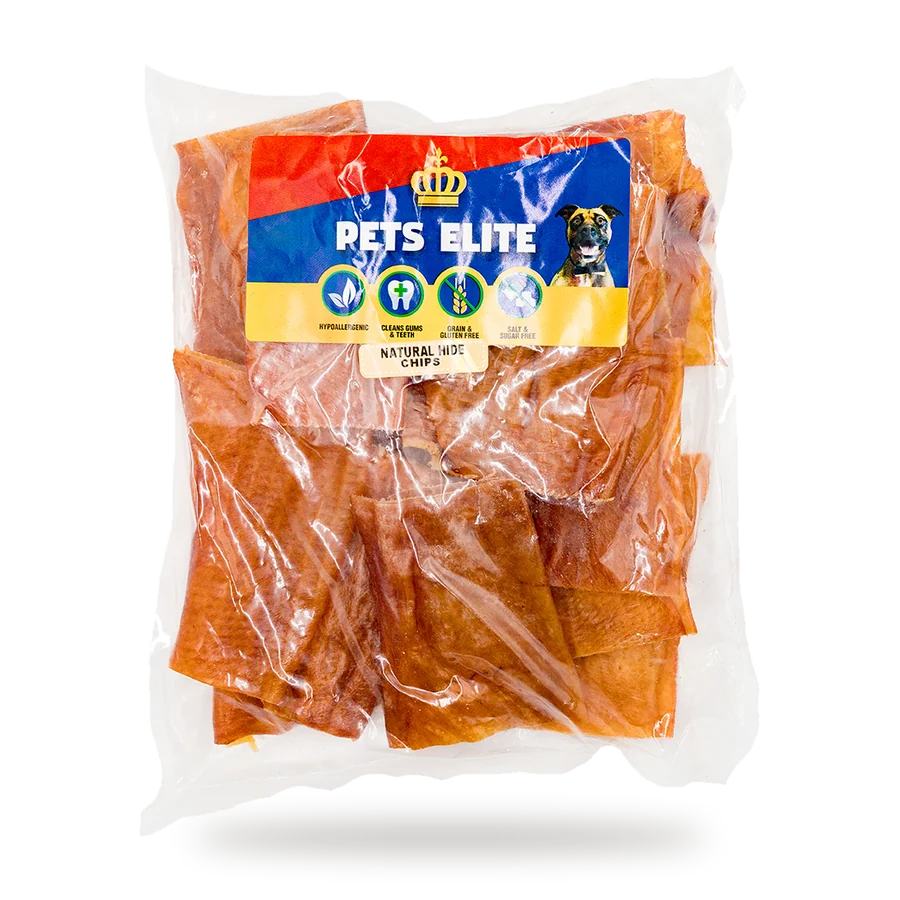 Natural Hide Chips2–4/5 · Soft to hardFlat sections of real pork rind, each around 90×90mm, folded in two to make a chip roughly 3 to 5mm thick. About 450g in a pack.
- Details
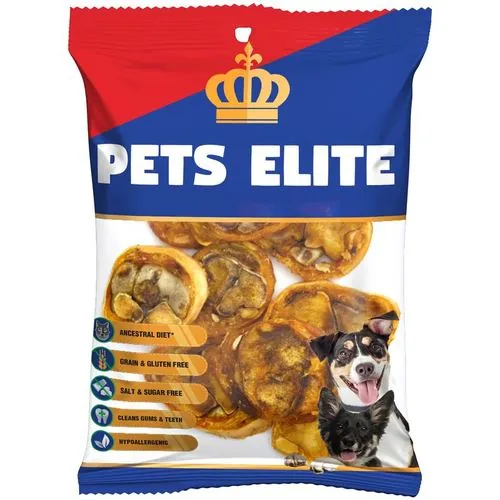 Doggy Chips2–4/5 · Soft to hardPets Elite Doggy Chips is a pork-skin based natural chew with a collagen-style texture and a shape designed for chewing interest. Chew strength varies with shape and thickness. It offers a grain-free alternative to starch biscuits and rawhide-style products.
- Details
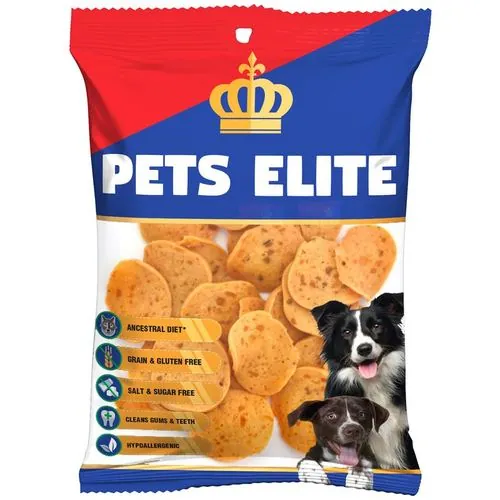 Doggy Crisps2–4/5 · Soft to hardReal pork skin cut into crisp-style pieces and dehydrated until light and brittle. 250g a pack. Chewiness varies from 2 to 4 across the pack depending on how thick each piece happened to be, so some shatter and some need a chew.
- Details
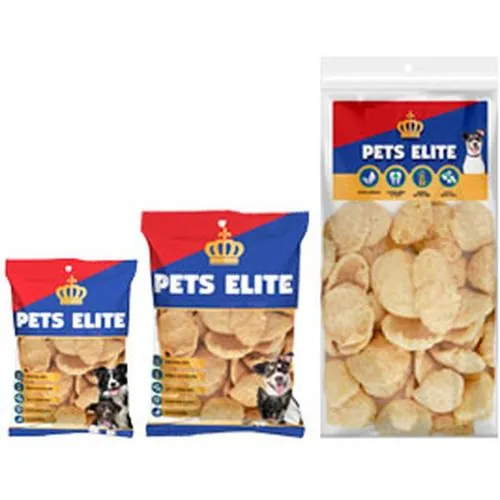 Meat Puffs1–2/5 · SoftEach puff is about 50×20mm.
- Details
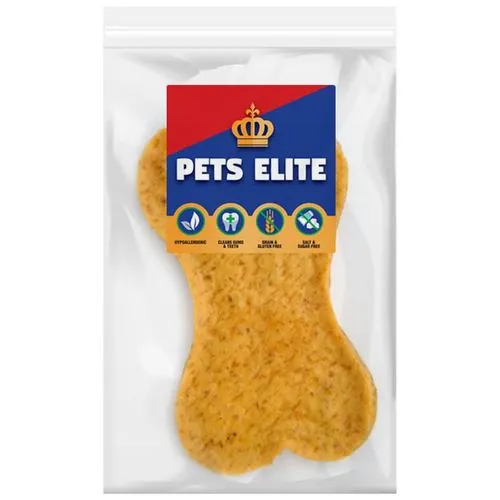 Meaty Biscuit2–4/5 · Soft to hardNot available online yetPets Elite Meaty Biscuit is a pork-skin based natural chew with a collagen-style texture and a shape designed for chewing interest. Chew strength varies with shape and thickness. It offers a grain-free alternative to starch biscuits and rawhide-style products.
- Details
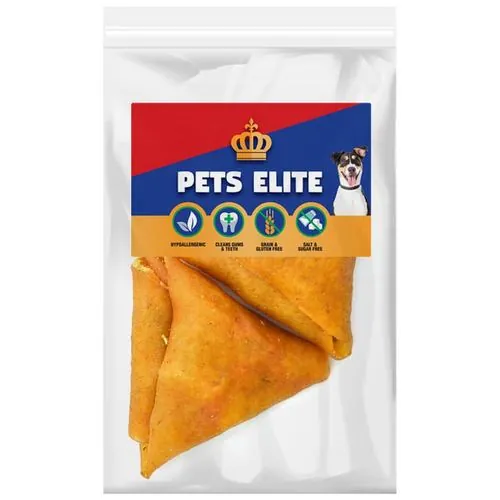 Samoosa2–4/5 · Soft to hardPets Elite Samoosa is a pork-skin based natural chew with a collagen-style texture and a shape designed for chewing interest. Chew strength varies with shape and thickness. It offers a grain-free alternative to starch biscuits and rawhide-style products.
- Details
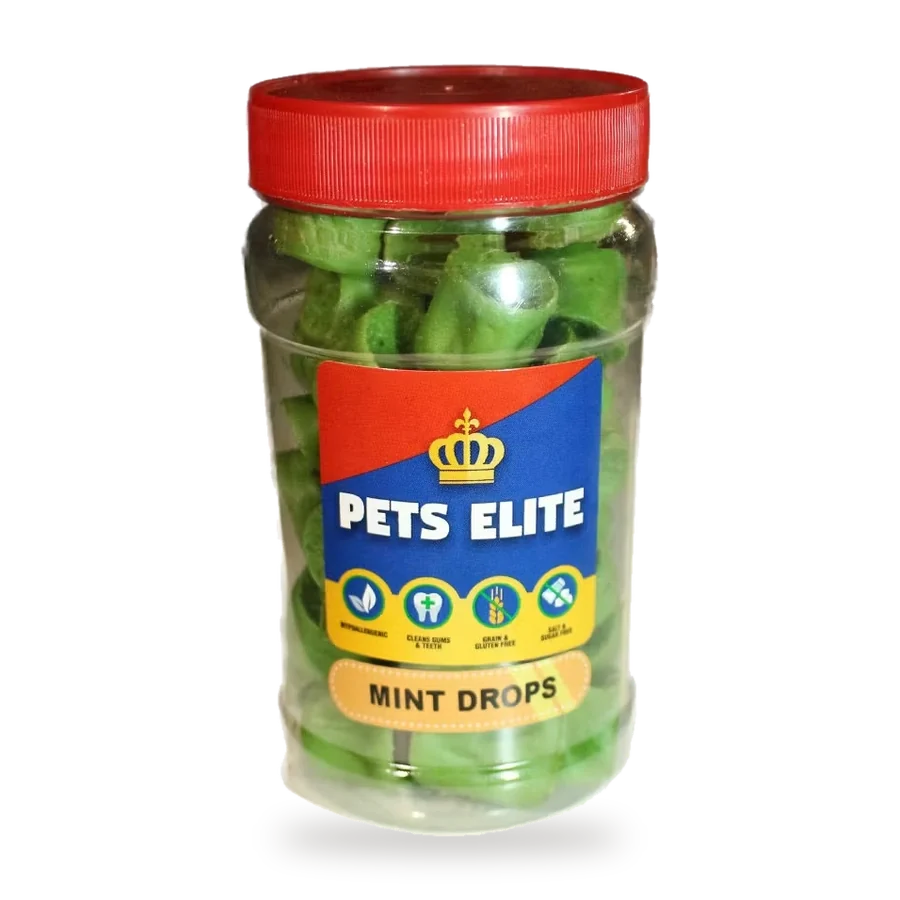 Mint Drops2–4/5 · Soft to hardPork collagen, peppermint essence, glycerin and natural green food dye, formed into small squares (about 15×15mm).
- Details
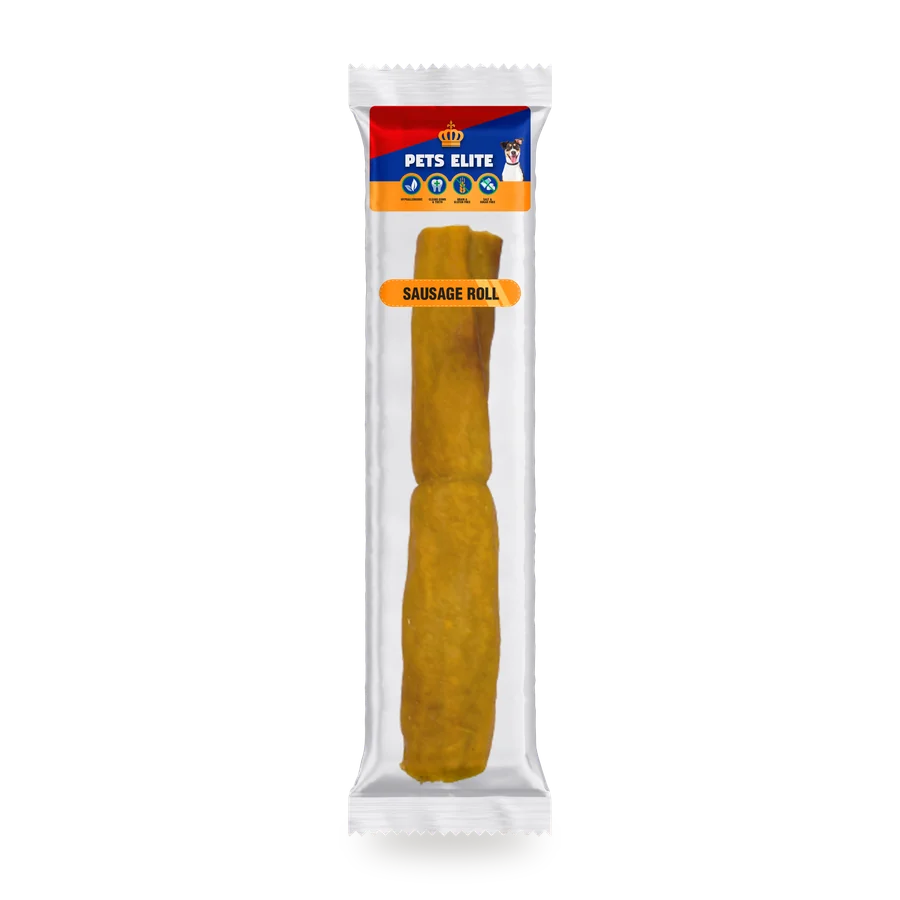 Sausage Roll3/5 · Medium hardA length of pork rind rolled and wrapped around a filling of Pets Elite dehydrated sausage. About 25mm across in all three sizes; length is what changes — 75mm, 150mm or 300mm.
- Details
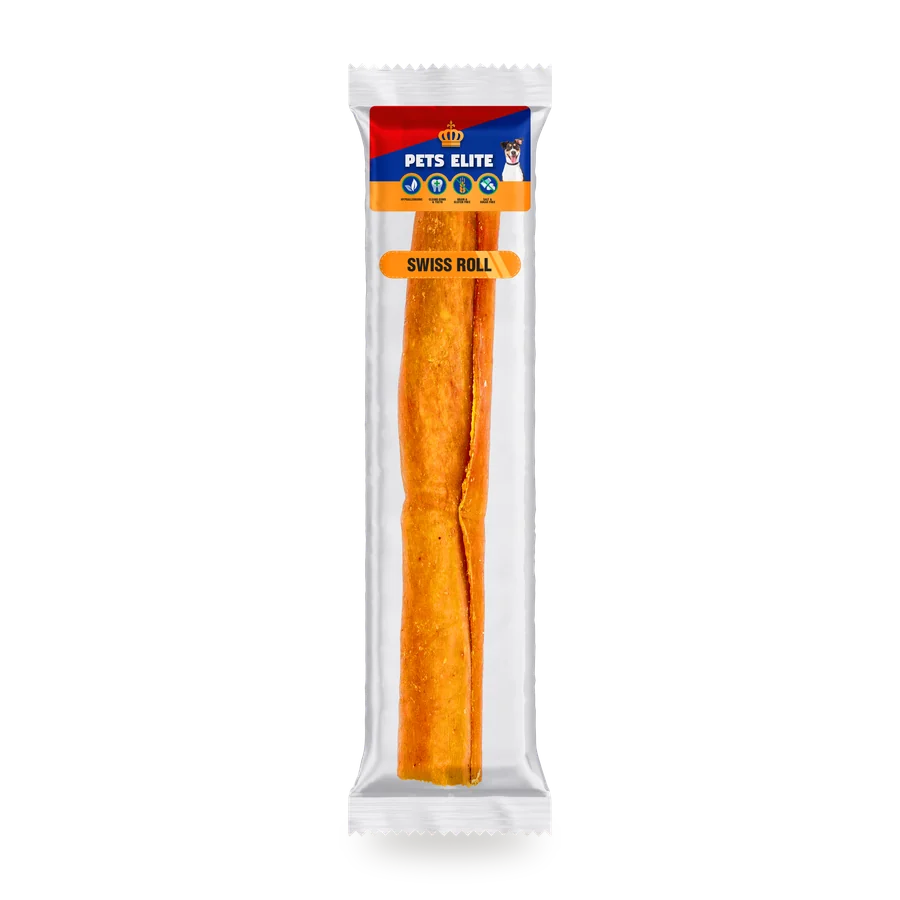 Swiss Roll2–4/5 · Soft to hardA long strip of real pork rind, hand-rolled into a tight spiral and dehydrated. Roughly 30cm end to end. Colour and exact size vary from piece to piece.
- Details
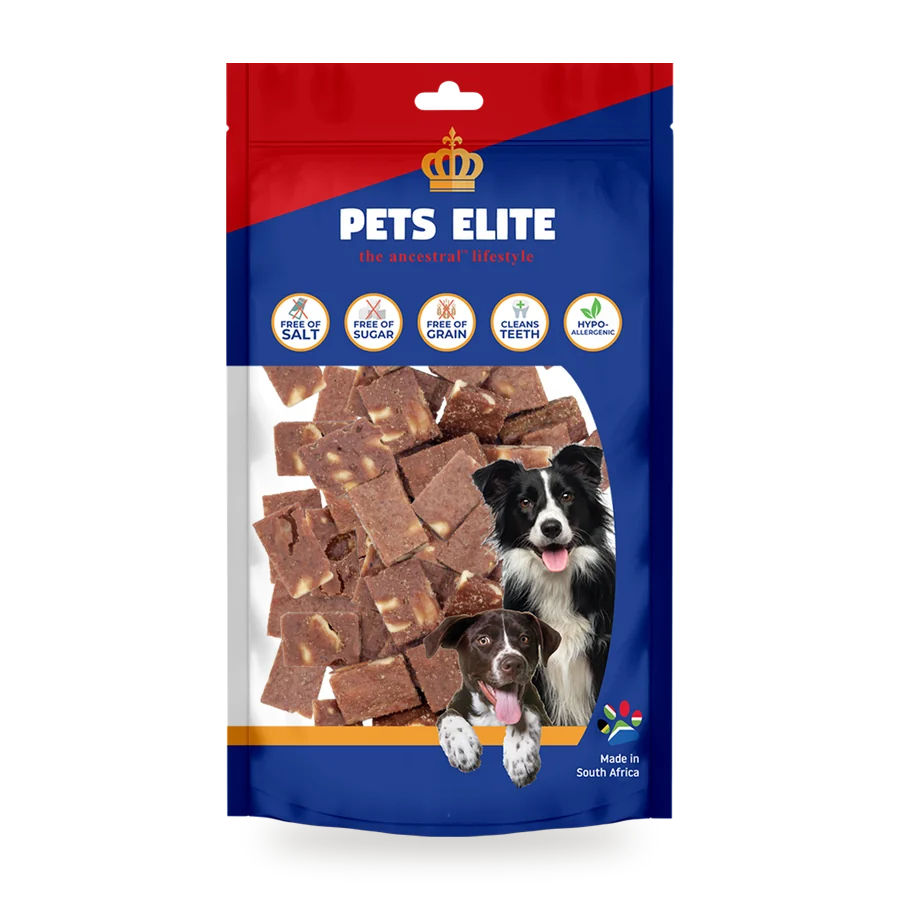 Peanut Brittle4/5 · HardA hard chew made from pork hide collagen with peanuts, available as sticks or bite-sized pieces. Contains a natural food colourant.
- Details
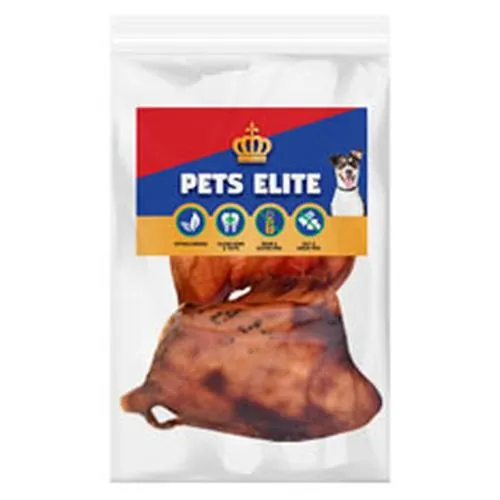 Pig's Ear3/5 · Medium hardPig's Ear is a natural dog treat: a pig's ear. It is designed to give dogs real animal-based flavour, texture and enrichment without unnecessary grains, sugars, salts or artificial additives. Use as a complementary treat, choose the right size for the dog and always provide fresh drinking water.
- Details
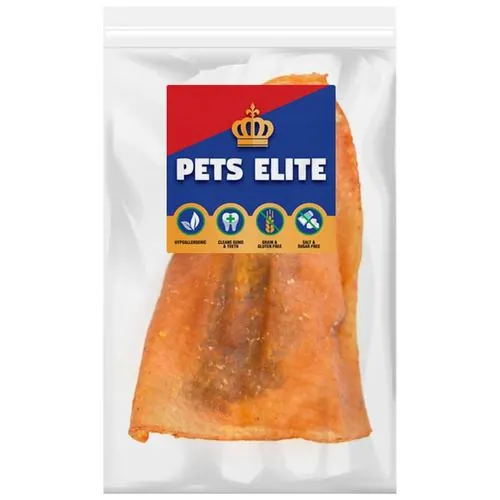 Filled Pig's Ear4–5/5 · Very hardNot available online yetFilled Pig's Ear is a filled natural chew: a longer-lasting chew with a flavourful filling. It is designed for enrichment, boredom relief and rewarding chew time, giving dogs a reason to lick, work and chew. It is made from real animal parts, without unnecessary grains, sugars, salts or artificial additives.
- Details
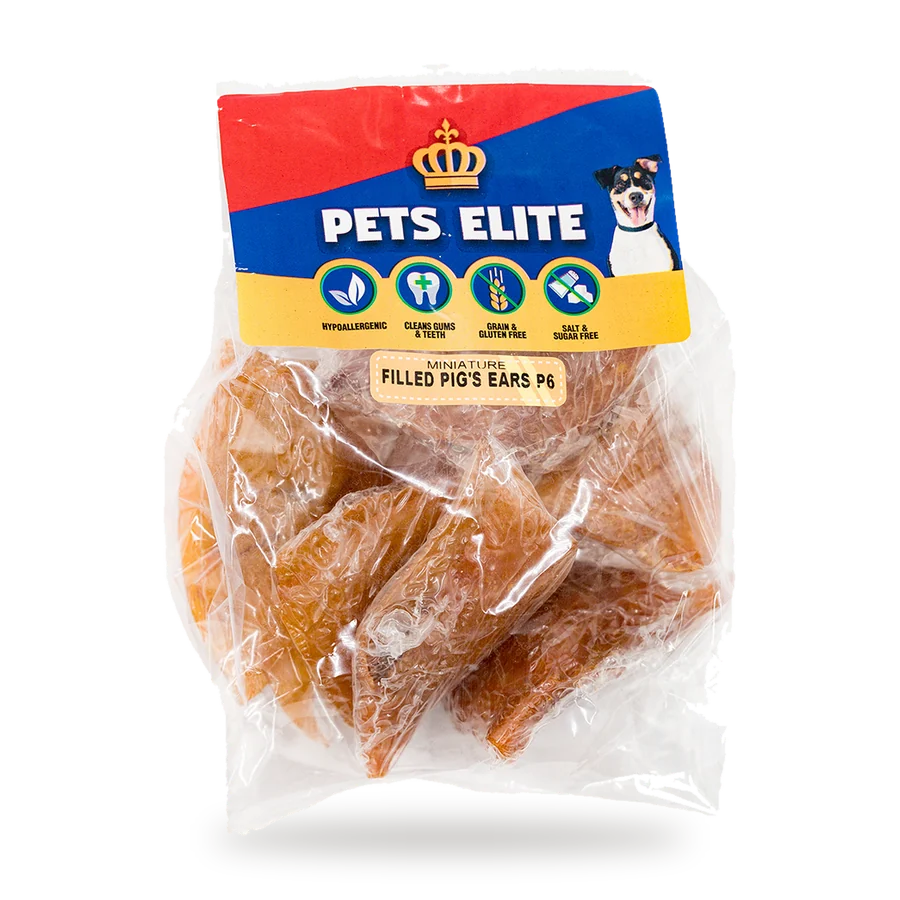 Filled Miniature Pig's Ears4–5/5 · Very hardNatural pork rind folded into a miniature ear shape, with a strip of Pets Elite beef jerky between the layers. Six to a pack, roughly 130g in total. Rind is about 4 to 5mm thick.
Sources
Where these facts come from.
- WikiVet, “Skin – Anatomy & Physiology”.The dermis is dense fibrous tissue of collagen types I, III and V.
- Reiche L. DermNet, 2020, “Collagen”.Collagen makes up at least 70% of the dry weight of human skin; type I is the main form in the dermis.
- WikiVet, “Ear – Anatomy & Physiology”.The pinna is the auricular cartilage, covered by skin on both sides.
- Brelje TC, Sorenson RL. Histology Guide, University of Minnesota, “Pinna of the ear (cow)”.The outer ear is elastic cartilage: collagen with a dense network of elastic fibres.
- CDC, 2025, “About Pet Food Safety”.Wash your hands with soap and water before and after handling pet food or treats.
- Merriam-Webster, “rawhide”.Rawhide: untanned cattle skin.
- Kerns N. Whole Dog Journal, 2009, “Finding the Right Rawhide Chew for Your Dog”.Rawhide is the inner layer of the hide, a by-product of the leather industry.
- USDA FoodData Central, SR Legacy, FDC 167857, “Pork, fresh, variety meats and by-products, ears, frozen, raw”.Fat 15.1 g and water 61.2 g per 100 g.
- WSAVA, 2024, “Feeding treats to your dog”.Treats should be no more than 10% of a dog’s daily calorie intake.
- USDA FoodData Central, SR Legacy, FDC 167961, “Snacks, pork skins, plain”.Pork skin snacks for people, with their salt.
- Product facts, chew strength and pack sizes: our own product pages and packs.
Written by Pets Elite, a Cape Town business run by a master butcher and in the pet trade since 2002. Last checked 16 October 2026.
More ingredients